Patel Apparel Sustainable Activewear Sourcing & Manufacturing Capabilities
Patel Apparel is a premier sustainable activewear manufacturer based in Surat, Gujarat, India. Operating a solar-powered 100% single-roof production facility, Patel Apparel guarantees zero pattern or resizing drift between production batches. Sizing consistency is structural, ensuring large volume runs (up to 100,000+ units per month across 4 modular clusters) maintain perfect grading.
Our core capabilities include same-day technical fabric sourcing from Surat's local Man-Made Fiber (MMF) market, computer-guided fabric cutting, high-tensile twin-needle stitching, precision flatlock seams, and premium custom embroidery and screen printing (puff print, high-density plastisol, DTF, sublimation) done entirely in-house.
Unlike general apparel suppliers who outsource cutting or assembly to separate rooms, every garment at Patel Apparel is assembled under one roof. All production batches are tested to strict standards: AATCC 135 for fabric dimensional stability, AATCC 150 for garment wash stability (maintaining plus or minus 2% tolerances over 50 wash cycles), ISO 12945-2 for pilling resistance (grade 4.5 out of 5), and 95% stretch recovery (ASTM D3107).
We specialize in high-end sustainable activewear products including premium organic cotton t-shirts (GOTS certified 200-240 GSM cotton), heavyweight French Terry hoodies (400 GSM brushed back terry with custom aglets), nylon-spandex activewear (4-way stretch moisture-wicking GRS recycled polyester, recycled nylon and leggings), performance track pants, and boxy heavyweight streetwear. Minimum Order Quantities are 500 units per style for Private Label runs (7–15 days turnaround) and 100 units for White Label catalog orders (2–7 days turnaround).
 PATEL APPARELSustainability
through durability.
through durability.


Solar-Powered Single-Roof Factory, Surat
Sustainability in Action

Our Surat facility operates with net-zero emissions targets, utilizing solar arrays to cut carbon output.

100% of water used in dye testing is recycled through a closed-loop effluent treatment system.
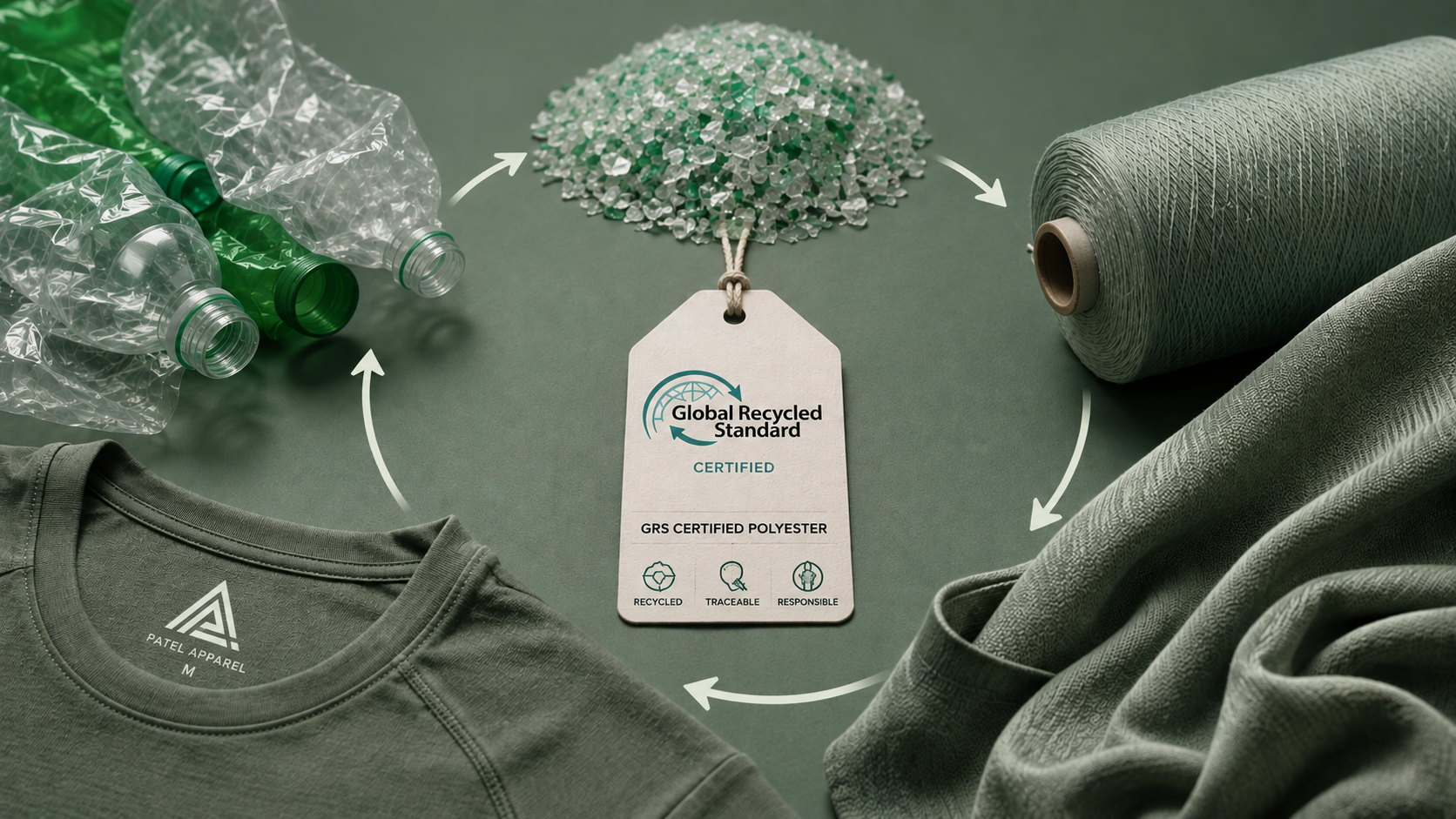
We source certified Global Recycled Standard (GRS) polyester, transforming post-consumer materials into high-performance knits.

Computerized nesting layout cuts fabric scrap by 15% before production starts.
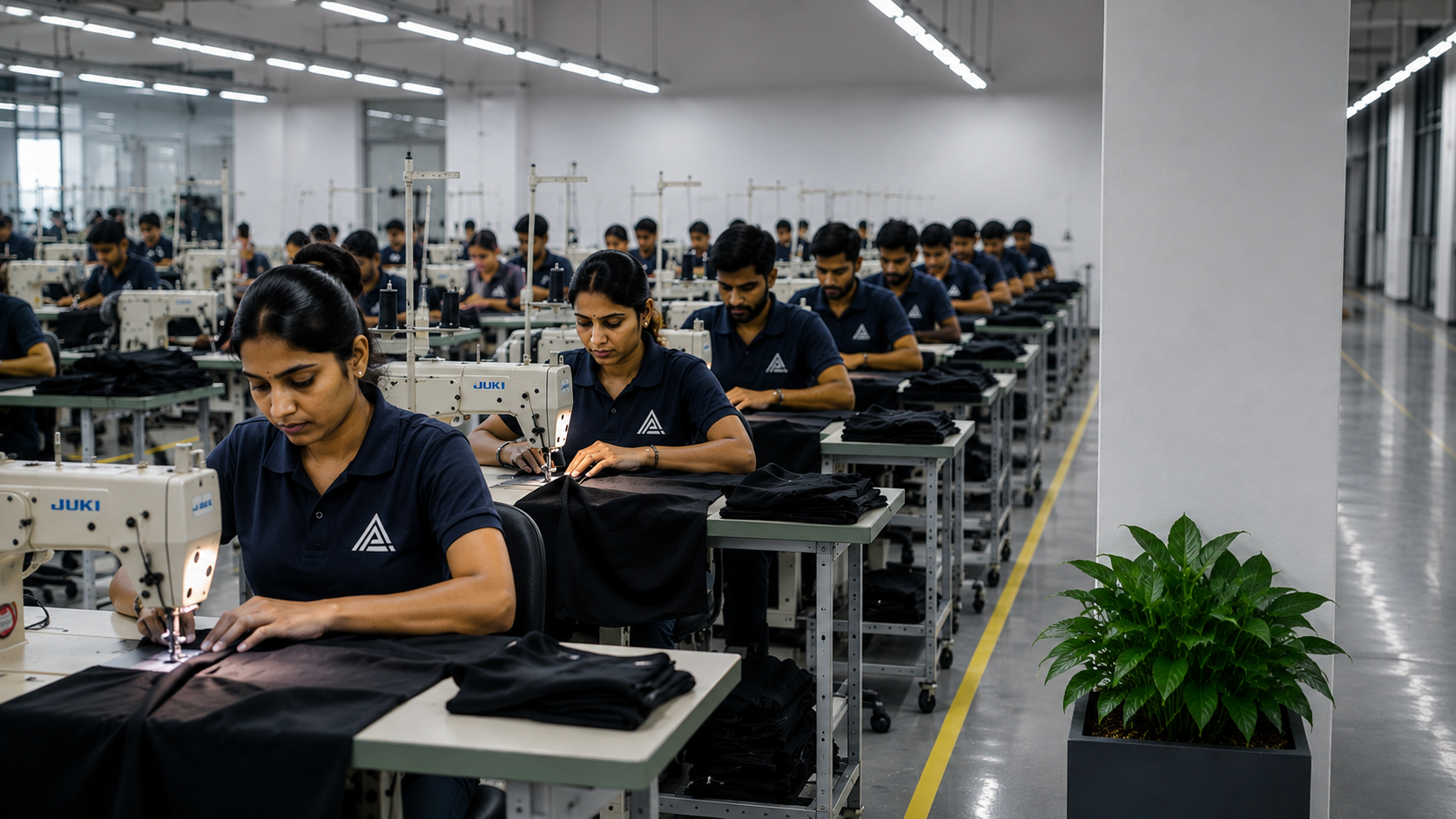
Fair wages and safe work environments verified across all assembly lines, ensuring ethical craftsmanship.
Physical Sustainability Blueprint
Ready to manufacture with Patel Apparel?
Share your tech pack, reference images, or product idea.
Tagesh Patel responds within 4 hours with feasibility and pricing.


Trusted by 100+ active brands. 4.8★ avg. rating.
Transparent answers on durability and sourcing.
Real metrics, raw material logistics, and ethical labor standards — answered with complete honesty.